

REU Projects
At the University of Arizona, we are building a program to bridge the gap between laboratory- and field-scale studies by utilizing the unique infrastructure of Biosphere 2. Biosphere 2 offers unique opportunities for the exploration of complex questions in Earth sciences because of its ability to combine varying scales, precise manipulation and fine monitoring in controlled experiments. By building upon the large external scientific network at the University of Arizona in hydrology, geology, geochemistry, ecology, biology, physics, engineering and atmospheric sciences, we are developing a strong multidisciplinary team of researchers who are undertaking the design and deployment of top-notch science to address complex questions in environmental sciences. Projects for 2026 REU students include:
Ecosystem Science, Renewable Energy Production, Food, and Water Sustainability
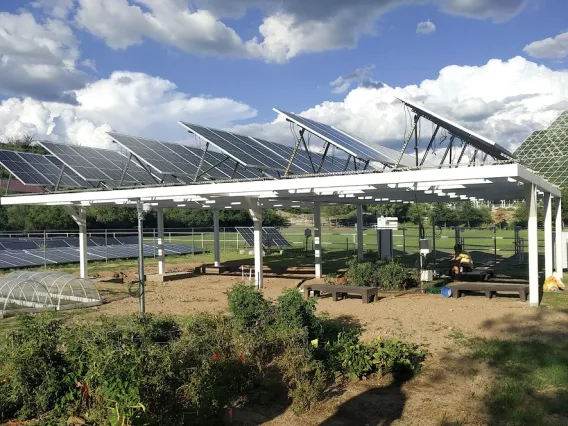
Greg Barron-Gafford, Dept. of Geography and Development, and Biosphere 2. External forces (like environmental and human factors) and internal characteristics (like plant ecophysiology) determine where species can live and thrive. This nexus is critical for tackling one of the greatest challenges facing our future - how to simultaneously maximize renewable energy production and food production without degrading the environment. The "Agrivoltaics" installation at B2 blends renewable energy production from solar photovoltaics with agriculture to study the impacts of this novel approach on plant function, water use, and biomass production.
Tropical Forest Dynamics and Trace Gas Fluxes
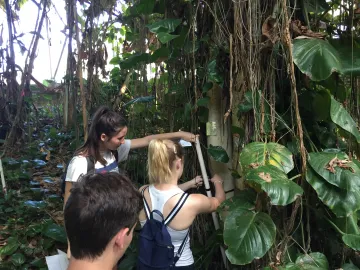
Joost van Haren, Biosphere 2. Tropical forests are among the most dynamic ecosystems in the world, but their responses to climate change are uncertain. B2 provides an opportunity to study tropical ecosystems under future conditions (increased temperature, decreased precipitation); the large enclosure and artificial rainfall allows precise determination of water and carbon movement through the biome. Students use the B2 tropical forest to assess plant, hydrological, and carbon cycling responses to altered temperature and precipitation.
Landscape Evolution Observatory
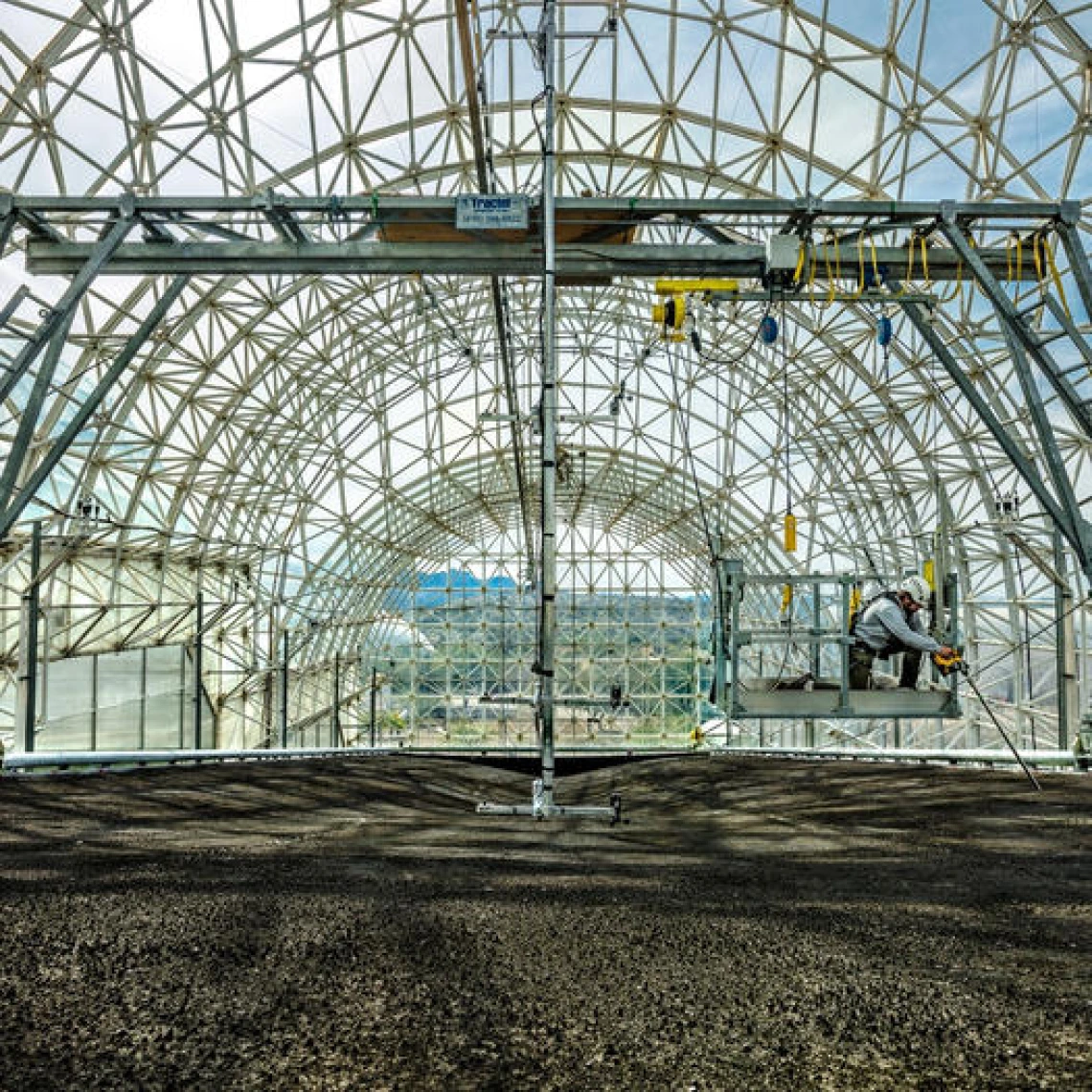
Scott Saleska, EEB. The Biosphere 2 Landscape Evolution Observatory (LEO) is discovering answers to the fundamental question of landscape terraformation: how does life expand and sustain itself, in increasingly complex forms (from simple microbial life, to non-vascular mosses, to vascular plant-microbe associations with complex hydraulic architectures and life-sustaining symbioses), across landscapes at multiple scales to transform bare rock into complex multi-function ecosystems? Insights gained from LEO can help us learn new ways to address problems ranging from how to build sustainable life support systems for other planets to restoring severely degraded landscapes from mining or other processes. Students will have the opportunity to work with a transdisciplinary team consisting of engineers, educators, hydrologists, modelers, geochemists, social scientists, ecologists, botanists, microbiologists, and remote sensing scientists.
Calcification & biomineralization under a changing climate
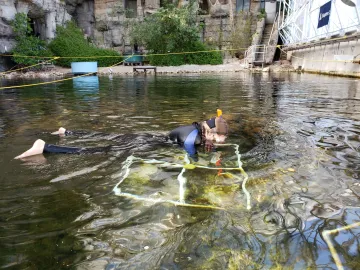
Diane Thompson, Dept. of Geosciences (GEOS). The Biosphere 2 Ocean (B2O) mesocosm provides a unique opportunity to isolate the impacts of temperature and acidification on calcifying reef organisms at ecosystem scale. Leveraging this scale and control, this project will assess the impact of changing ocean conditions on the growth of calcifying reef organisms, and in turn, the climate records generated from carbonate skeletons (e.g., corals, coralline algae, bivalves, and foraminifera). Controlled experimental studies are required to understand the processes by which geochemical signals are incorporated into the carbonate skeleton during the calcification process (“biomineralization”), and how these processes change as a function of calcification rate, species and environmental conditions. This project will provide REU students with hand-on research experience at the interface of reef ecology, geochemistry, and paleoclimatology in the largest experimental ocean facility in the world, working with leading paleoclimate researchers in GEOS.
Estimating whole ecosystem scale evapotranspiration (ET) in water-limited environments
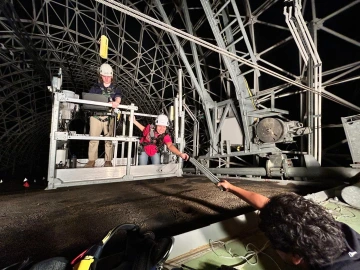
Peter Troch, HAS. ET makes up 60-90% of the water balance for most semi-arid to humid catchments and the largest component of ET is plant transpiration. A key way in which plants vary in water use and carbon cycling traits is through variation in root morphology, allowing them access to different pools of water; plants are likely spatially organized to maximize their competitive ability across a landscape, which in turn may affect local and ecosystem scale ET. Students will examine how patterns of vegetation type and density along hydrologic flow paths can help predict
whole-ecosystem ET flux.
Mineral weathering, soil formation and carbon sequestration as influenced by water flow and biota
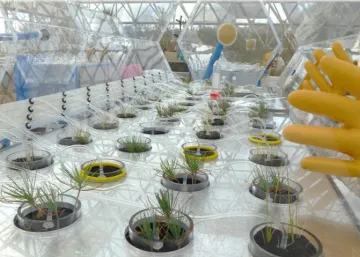
Katerina Dontsova, ENVS and B2. Projects at Biosphere 2 would focus on soil formation processes and development of subsurface heterogeneity through hydrologic-geochemical coupling using direct measurement and geochemical modelling: what happens in the basalt covering LEO slopes as a result of water flow and biological activity; what is the role of slope position, water residence time, and microbial activity on total weathering, chemical denudation, formation of high surface-area secondary solids, and accumulation of organic and inorganic carbon.
.
Microbial-organic matter interactions and controls in dynamically changing systems
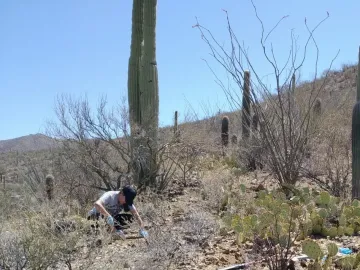
Malak Tfaily, ENVS. My research interests revolve around terrestrial interactions of geochemical and biological processes, at multiple scales (pore-to-ecosystem scale) and the resulting impact on the whole ecosystem. We use a combination of modern analytical molecular (high resolution mass spectrometry, etc.), geochemical (wet chemistry and gas flux), and isotopic techniques (natural abundance, and isotope enrichment) to answer where and how organic matter degradation and formation takes place in different ecosystems. Students would couple field work and laboratory studies to understand and examine the direct relationship between organic matter composition, the activity of the biological community, the geochemical signature of the activity and how that signature may translate between environments.
Microbes as the engineers of the soil, plants, and atmosphere
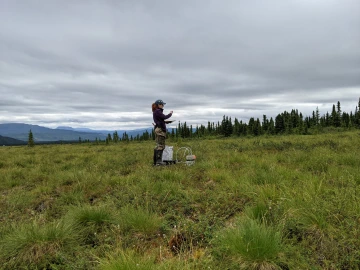
Laura Meredith, SNRE. How do soil microbiomes affect the biosphere, and specifically, its atmosphere? Our research focuses on interactions between ecosystems and the atmosphere that affect climate, air quality, and ecosystem health. I study the role of soil microbiomes in ecosystems and their immense capacity to transform matter in ways that release, or take up, trace gases. My group measures microbial cycling of trace gases that influence climate (e.g., N2O, CH4, CO2) and mediate biological interactions belowground (e.g., volatile organic compounds). Our research aims to measure and decode new microbial signals in the soil in the B2 Tropical Rainforest and in LEO. Student(s) involved in this project will learn methods in microbial genomics, bioinformatics, and analytical atmospheric chemistry by contributing to ongoing research campaigns and data analyses.
Geospatial Trends in Groundwater Quality
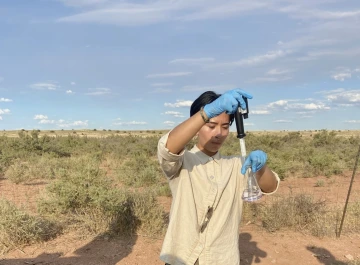
Joseph Hoover, ENVS. The overall objective of this research project is to apply GIS and spatial analysis methods to investigate groundwater quality trends for sources in Indigenous communities. Water management plans and infrastructure develop necessitate information about groundwater quality to support investigations for additional source development. Using existing publicly available data, students will analyze groundwater quality information, emphasizing trace metals, using geographic information systems. Students will receive training in applications of GIS and statistical analysis methods. There may also be opportunities for limited field work to collect water samples for analysis in partnership with Indigenous scholars and communities.
B2Twin, Virtual Reality, and AI Tools
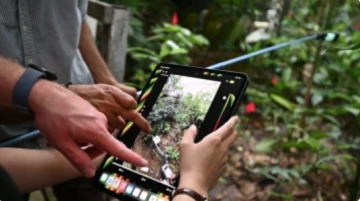
Ash Black, College of Information Sci. Immersing students in the pioneering creation of the B2Twin - a dynamic, scientifically rigorous virtual replica of B2's iconic biomes and complex research systems - this initiative will establish the world's first living laboratory digital twin, with profound implications for Earth systems science capacity, sustainable technology, and global science communication. B2Twin will represent and eventually control physical processes happening in B2 biomes in real time. Students will learn about next-gen modeling and gain the skills to join a workforce of the future.
Understanding Plant Resilience to Climate Stress in Drylands
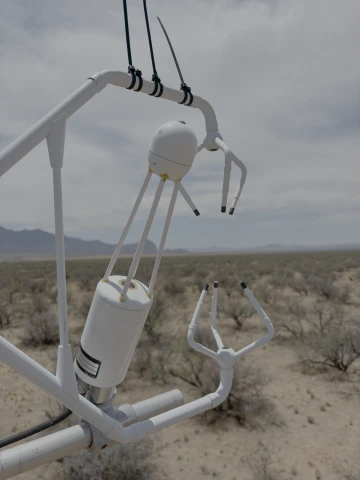
David Moore, School of Natural Resources and the Environment. This NSF REU project is a companion to ongoing research that uses long-term flux tower and remote sensing data to understand how arid and semi-arid ecosystems respond to drought and extreme heat. While the broader study focuses on ecosystem-scale water and energy exchange across the Southwest, this REU project zooms in on the physiological mechanisms that drive those responses.
Working in the desert biome at Biosphere 2, the undergraduate researcher will investigate how plants regulate water use, tolerate heat, and recover from stress by linking plant physiological traits (such as water status, gas exchange, or growth responses) to soil water availability and environmental conditions. By connecting plant-level processes to ecosystem-scale patterns observed by flux towers, this project helps explain why some dryland ecosystems are more resilient to climate change than others.
The student will gain hands-on experience with ecological measurements, experimental design, and data analysis in a world-class research facility, while contributing to research that informs the sustainability of dryland vegetation under future climate extremes.